PDF

whispers of manifestation book pdf

Whispers of Manifestation Book PDF: A Comprehensive Overview (Updated February 19, 2026)

Whispers of Manifestation, published October 26, 2024, is a 79-page guide exploring a unique technique for achieving desires․ The book’s PDF version is sought after, with ISBN-13 979-8344565453, offering accessible manifestation insights․

What is “Whispers of Manifestation”?

Whispers of Manifestation introduces a novel approach to realizing goals, differing from traditional methods․ The book details the “Whisper Technique,” focusing on subconscious programming for effective manifestation․ It’s a 79-page guide, published in 2024, aiming to unlock latent potential through belief and focused intention, offering a PDF version for wider access․

The Core Principles of Whisper Manifestation

Central to Whispers of Manifestation is the belief in subconscious influence․ The technique emphasizes gentle, focused intention – “whispering” desires to the universe․ This contrasts with forceful affirmations, prioritizing belief and vivid mental imagery․ The book’s PDF guides users to unlock potential, aligning thoughts with desired outcomes for effective manifestation․

The Author and Publication Details

Details regarding the author of Whispers of Manifestation remain somewhat limited in readily available sources․ However, the book’s PDF was published on October 26, 2024, and spans 79 pages․ Its ISBN-13 is 979-8344565453․ The focus is on practical application of the “whisper” technique for manifestation․

Publication Date and ISBN

Whispers of Manifestation officially launched on October 26, 2024, providing readers with a concise, 79-page guide to the whisper manifestation technique․ Identifying the book is easily done using its unique ISBN-13: 979-8344565453․ This identifier is crucial when searching for the PDF version online․

Author Background and Expertise

Information regarding the author’s background and specific expertise remains somewhat limited in readily available sources concerning the Whispers of Manifestation book PDF․ While details are scarce, the focus of the work suggests a deep understanding of subconscious programming and alternative manifestation methods․

Key Techniques Explained in the Book

The Whispers of Manifestation book PDF details a unique approach, centering around the “Whisper Technique․” It also explores utilizing affirmations in conjunction with this method to enhance results․ The core lies in subtly influencing the subconscious mind to align with desired outcomes, fostering manifestation․

The Whisper Technique: A Detailed Breakdown

The Whisper Technique, central to the book, involves articulating desires as quiet, internal “whispers” rather than forceful affirmations․ This subtle approach bypasses conscious resistance, directly influencing the subconscious․ It’s presented as a step-by-step process within the Whispers of Manifestation PDF, aiming for effortless manifestation․

Utilizing Affirmations with the Whisper Method

The Whispers of Manifestation book suggests pairing affirmations with the “whisper” technique for amplified results․ Instead of loudly declaring goals, softly “whisper” affirmations internally․ This combines the power of positive statements with subconscious programming, as detailed in the PDF, fostering belief and accelerating manifestation․

How “Whispers of Manifestation” Differs from Other Manifestation Methods

Unlike traditional Law of Attraction approaches, the Whispers of Manifestation book PDF emphasizes subtle, internal work․ It prioritizes subconscious reprogramming through the “whisper” technique, rather than forceful visualization or grand declarations․ This nuanced method, detailed within the book, aims for deeper, more consistent manifestation․

Comparison to the Law of Attraction

While both aim for manifestation, the Whispers of Manifestation book PDF diverges from the Law of Attraction’s focus on “asking, believing, receiving․” It’s less about actively attracting and more about aligning with desired outcomes through gentle subconscious influence, as detailed in the book’s techniques․

Focus on Subconscious Programming

The Whispers of Manifestation book PDF uniquely emphasizes reprogramming the subconscious mind․ Unlike broad affirmations, the “Whisper Technique” detailed within aims for subtle, direct communication with the subconscious․ This approach, as outlined in the book, fosters belief and facilitates manifestation without forceful intention․

Finding and Accessing the “Whispers of Manifestation” PDF

Locating the Whispers of Manifestation book PDF requires caution․ While demand is high, prioritize legitimate sources to ensure authenticity․ Beware of scam websites offering “free” downloads, potentially containing malware․ Official retailers and the author’s website are the safest avenues for accessing this manifestation guide․

Legitimate Sources for PDF Download

Currently, direct official channels for a Whispers of Manifestation PDF aren’t widely publicized․ Checking the author’s official website is crucial․ Reputable online bookstores may offer authorized digital versions․ Avoid third-party sites promising free downloads, as these often distribute pirated or compromised files, risking your device’s security․

Avoiding Scam Websites and Pirated Copies

Be wary of websites offering the “Whispers of Manifestation book free download”, especially those requesting personal information․ Pirated PDFs may contain malware or viruses, compromising your data․ Support the author by purchasing from legitimate sources only․ Prioritize your digital safety and ethical content consumption․

User Reviews and Testimonials

Early feedback on “Whispers of Manifestation” highlights its accessible approach to manifestation․ Readers report positive experiences with the Whisper Technique, noting increased clarity and focus․ Some express concerns about the method’s simplicity, desiring more advanced exercises․ Overall, reviews suggest a promising resource for beginners․

Positive Experiences and Success Stories

Users share stories of achieving goals—career advancements, improved relationships—after implementing the Whisper Technique․ Many praise the book’s emphasis on subconscious programming․ Testimonials detail increased self-belief and a shift in mindset, leading to tangible results․ The PDF’s accessibility is frequently mentioned as a benefit․

Common Criticisms and Concerns

Some users report slow or no noticeable results, questioning the technique’s effectiveness․ Concerns arise regarding the potential for unrealistic expectations․ Others express skepticism about the reliance on “whispering,” deeming it pseudoscientific․ PDF authenticity and scam websites are frequent worries, urging caution when downloading․

The Role of Visualization in Whisper Manifestation

The book emphasizes combining vivid mental imagery with the “whisper” technique for amplified results․ Creating detailed scenes, feeling the emotions of already having your desire, is crucial․ This synergistic approach, detailed in the PDF, aims to deeply imprint intentions onto the subconscious mind, accelerating manifestation․

Creating Vivid Mental Images

The Whispers of Manifestation book PDF stresses engaging all senses during visualization․ Don’t just see your desired outcome; feel it, smell it, taste it, and hear it․ This multi-sensory immersion, as outlined in the guide, creates a powerfully realistic mental experience, boosting the manifestation process․

Combining Visualization with Whispering

The Whispers of Manifestation book PDF details how to amplify visualization by softly “whispering” affirmations while immersed in the mental image․ This technique, central to the method, subtly programs the subconscious mind․ The gentle vocalization reinforces the desired outcome, creating a potent synergy․

“Whispers of Fate” Series Connection (Potential Misconceptions)

Despite the similar title, the “Whispers of Manifestation” book PDF is unrelated to the historical-fantasy series, Whispers of Fate, featuring a Saudi Arabian cast․ Online searches often create confusion between the two․ The book focuses on a specific manifestation technique, while the series is a visual narrative․

Distinguishing the Book from the TV Series

The “Whispers of Manifestation” book PDF is a practical guide to a manifestation method, differing significantly from the Whispers of Fate TV series․ The series prioritizes storytelling and visual spectacle, appealing to broader audiences, while the book offers targeted techniques for personal development․

Addressing Online Confusion

Online searches for “Whispers of Manifestation” often yield results for the Whispers of Fate series, creating confusion․ Users seeking the book PDF should specify “manifestation” in their queries․ Beware of unrelated content; focus on resources detailing the Whisper Technique for clarity․

Manifestation Abilities and the Book’s Approach

Whispers of Manifestation centers on unlocking latent potential within individuals․ The book emphasizes the power of belief as crucial for successful manifestation․ It proposes a method to tap into subconscious programming, fostering a mindset receptive to realizing desired outcomes, unlike traditional approaches․

Unlocking Latent Potential

Whispers of Manifestation posits that everyone possesses untapped manifestation abilities․ The book’s techniques aim to awaken this inherent power, moving beyond simply wishing for things․ It guides readers to access and utilize their subconscious minds, fostering a belief system conducive to attracting positive change․

The Book’s Emphasis on Belief

Central to Whispers of Manifestation is the profound impact of belief․ The book stresses that genuine manifestation isn’t merely about technique, but cultivating unwavering faith in one’s ability to attract desired outcomes․ This conviction, it argues, is the foundational element for unlocking potential and achieving goals․

Practical Exercises from the Book

Whispers of Manifestation provides step-by-step guides for beginners, initiating them into the Whisper Technique․ More experienced users will find advanced methods to refine their practice․ These exercises aim to integrate the core principles, fostering consistent manifestation and accelerating the realization of personal desires․

Step-by-Step Guides for Beginners

The book details a simple, three-step process for beginners․ First, clearly define your wish; Second, utilize the Whisper Manifestation technique consistently․ Finally, maintain unwavering belief in the outcome․ These initial exercises build foundational skills, preparing newcomers for more complex manifestation practices․

Advanced Techniques for Experienced Manifestors

For seasoned practitioners, the book introduces layered whispering and emotional anchoring․ Combining affirmations with the core technique amplifies results․ Experienced users are encouraged to explore subconscious reprogramming exercises, deepening their connection to desired outcomes and accelerating the manifestation process․

Frequently Asked Questions (FAQ)

Is the PDF authentic? Legitimate sources offer the genuine Whispers of Manifestation content․ How long for results? Timelines vary; consistent practice is key․ The book emphasizes belief and subconscious work, so patience and dedication are crucial for experiencing desired manifestation outcomes․

Is the PDF version authentic?

Determining PDF authenticity requires careful sourcing․ Seek downloads from reputable platforms to ensure you receive the genuine Whispers of Manifestation content․ Beware of scam websites offering free, pirated copies, as these may contain malware or altered information, hindering your manifestation journey․

How long does it take to see results?

Results with the Whispers of Manifestation technique vary greatly depending on individual belief and consistent practice․ While some report quick wins, others require dedicated effort over weeks or months․ Patience and unwavering faith in the process, as detailed in the book’s PDF, are crucial․

The Elephant Whisperers: A Related Concept (and Potential Confusion)

Despite sharing the word “Whispers,” The Elephant Whisperers documentary (directed by Kartiki Gonsalves) is unrelated to the Whispers of Manifestation book PDF․ The documentary focuses on compassionate care for elephants, while the book details a specific manifestation technique․ Avoid confusion between these distinct subjects․

Clarifying the Difference in Subject Matter

The core difference lies in focus: The Elephant Whisperers portrays real-life animal care and human connection․ Conversely, Whispers of Manifestation, available as a PDF, presents a method for intentionally shaping one’s reality through subconscious programming and focused intention, a distinct self-help approach․

Exploring Themes of Care and Connection

While seemingly disparate, both explore connection․ The Elephant Whisperers showcases nurturing bonds with animals; Whispers of Manifestation’s PDF guide suggests connecting with one’s inner self and the universe to manifest desires, fostering a belief in interconnectedness and personal power for positive change․

Free Newsletter and Resources

Stay informed about Whispers of Manifestation techniques and updates by joining their free newsletter! Access additional support, potentially including exclusive content related to the book’s PDF, and connect with a community of fellow manifestors․ Don’t miss latest book summaries!

Staying Updated on Manifestation Techniques

Subscribing to the newsletter ensures you receive the latest insights on the Whisper Manifestation method detailed in the book’s PDF․ Learn about new exercises and strategies to enhance your manifestation abilities, staying current with evolving techniques and community discoveries․

Additional Support and Community Forums

Connect with fellow readers of the Whispers of Manifestation book PDF through dedicated online forums․ Share experiences, ask questions, and receive support from a community focused on mastering the Whisper Manifestation technique, fostering collaborative learning and accelerated manifestation success․

Instructions

glo teeth whitening instructions

Glo Teeth Whitening Instructions: A Comprehensive Guide (Updated 02/12/2026)

Achieving a brighter smile is now within reach! This guide details Glo’s innovative approach, offering a pathway to remove years of stains gently and effectively․

Transform your teeth from coffee and wine-stained to pearly masterpieces, understanding potential side effects and maintaining long-lasting results with our detailed instructions․

Understanding Glo Science & Teeth Whitening

Glo Science represents a significant advancement in teeth whitening technology, moving beyond traditional methods that can cause discomfort or uneven results․ The system is built upon a foundation of dental professional expertise and cutting-edge light technology․ Unlike some whitening options, Glo focuses on a balanced approach, aiming for noticeable brightness without excessive sensitivity․

Many seek that “Hollywood smile” seen on social media, but quick-fix solutions often fall short․ Glo distinguishes itself by combining a professional-strength whitening gel with a specifically calibrated LED light․ This combination accelerates the whitening process, allowing for more efficient stain removal․ The technology addresses concerns surrounding carbamide peroxide, a common whitening agent, by optimizing its delivery and minimizing potential negative side effects․

Glo isn’t simply about aesthetics; it’s about restoring confidence through a safe and effective process․ It’s a system designed to deliver professional-level whitening in the comfort of your own home, or under the guidance of a dental professional․

How Glo Teeth Whitening Works: The Technology

Glo’s technology centers around a unique combination of a professional-grade whitening gel and patented LED light technology․ The gel contains a carefully formulated concentration of hydrogen peroxide, the active whitening agent, designed to penetrate the enamel and break down stain molecules․ However, the gel alone isn’t the complete story․

The Glo mouthpiece incorporates blue LED light, which activates the whitening gel, accelerating the breakdown of stains․ This light activation is key – it’s what differentiates Glo from over-the-counter whitening strips․ The light energy enhances the gel’s effectiveness, leading to faster and more visible results․

Furthermore, the mouthpiece design ensures optimal gel contact with the teeth, maximizing coverage and minimizing gel spillage․ This targeted application, combined with the LED activation, allows for a more controlled and efficient whitening process, reducing the potential for sensitivity often associated with traditional methods․ It’s a scientifically-backed system designed for optimal performance․

Benefits of Using Glo Teeth Whitening Systems

Glo teeth whitening offers several advantages over traditional methods․ Users experience noticeably brighter smiles, effectively removing years of staining from common culprits like coffee, wine, and juices․ Unlike harsh whitening strips, Glo’s technology aims for a more comfortable experience, minimizing teeth sensitivity and gum irritation․

The speed of results is a significant benefit; many users see a visible difference after just one treatment․ The professional-grade gel, combined with LED light activation, delivers powerful whitening without the lengthy commitment of some in-office procedures․

Moreover, Glo’s system provides a convenient at-home solution, eliminating the need for multiple dental visits․ The controlled application and targeted light technology contribute to a safer and more effective whitening process, helping individuals achieve a confident, radiant smile․

Preparing for Your Glo Teeth Whitening Treatment

Optimal results require careful preparation! Schedule a dental check-up, assess your candidacy, and address any potential sensitivity before beginning your Glo whitening journey․

Initial Consultation & Dental Check-up

Before embarking on your Glo teeth whitening journey, a thorough dental consultation is paramount․ This initial appointment allows your dentist to evaluate your overall oral health, identifying any existing conditions – such as cavities, gum disease, or exposed roots – that may impact treatment or require attention before whitening․

The dentist will assess the suitability of Glo for your specific needs, discussing your expectations and any concerns you may have․ They’ll examine your teeth for existing restorations (fillings, crowns) as these won’t respond to whitening and may require replacement post-treatment for a uniform appearance․

A professional cleaning is typically recommended prior to whitening to remove plaque and surface stains, maximizing the effectiveness of the Glo system․ This ensures the whitening gel can evenly penetrate the enamel, delivering optimal brightening results․ Don’t skip this crucial step!

Assessing Candidacy: Who is Glo Suitable For?

Glo teeth whitening is a fantastic option for many, but not universally suitable․ Ideal candidates generally have healthy teeth and gums, with minimal sensitivity․ Those seeking to address extrinsic stains – caused by coffee, tea, wine, or tobacco – will see the most dramatic results․

However, individuals with certain conditions may not be ideal candidates․ These include pregnant or breastfeeding women, those with severe gum disease, significant tooth decay, or exposed roots․ Existing restorations like crowns or veneers won’t whiten, potentially creating shade mismatches․

Patients with a history of teeth sensitivity should discuss this with their dentist, as pre-treatment desensitizing may be necessary․ A realistic expectation is also key; Glo can significantly brighten your smile, but achieving an “impossible” Hollywood white isn’t always feasible or healthy․

Sensitivity Assessment & Desensitizing Options

Prior to starting Glo whitening, a sensitivity assessment is crucial․ Your dentist will evaluate your teeth for existing sensitivity and discuss your history․ Some discomfort during whitening is normal, but excessive sensitivity requires attention․

Several desensitizing options can mitigate discomfort․ Using a fluoride toothpaste for a week or two before treatment strengthens enamel․ In-office application of fluoride varnish can also reduce sensitivity․ Potassium nitrate-containing toothpastes are effective for ongoing management․

During treatment, adjusting the duration or intensity of the Glo device can help․ If sensitivity becomes unbearable, pausing treatment and consulting your dentist is essential․ Remember, temporary discomfort is preferable to long-term enamel damage․ Proactive desensitization ensures a more comfortable and successful whitening experience․

Step-by-Step Glo Teeth Whitening Instructions

Follow these simple steps for optimal results! Prepare the vial and mouthpiece, apply the gel precisely, utilize the Glo device as directed, and rinse thoroughly afterward․

Step 1: Preparing the Glo Vial & Mouthpiece

Begin by ensuring both the Glo vial and mouthpiece are meticulously clean․ Gently twist the cap off the Glo whitening vial, being careful not to introduce any contaminants․ The vial contains the professional-strength whitening gel, crucial for achieving noticeable results․

Next, prepare the mouthpiece․ This typically involves a flexible, comfortable design molded to fit your teeth․ Inspect the mouthpiece for any damage or debris before use․ Ensure it’s completely dry to optimize gel adhesion․

Carefully dispense the appropriate amount of gel – usually a small bead – into each impression of the mouthpiece․ Avoid overfilling, as excess gel can cause gum irritation․ A precise application ensures even whitening and minimizes sensitivity․ Close the vial immediately after dispensing to maintain gel potency․

Step 2: Applying the Glo Whitening Gel

With the Glo mouthpiece prepared, the next crucial step is precise gel application․ Ensure you’re working in a well-lit area for optimal visibility․ Gently insert the filled mouthpiece into your mouth, carefully aligning it with your teeth and gums․

Apply gentle pressure to ensure the gel makes consistent contact with the tooth surfaces․ Avoid excessive force, which could cause discomfort or uneven distribution․ The gel should cover the visible portion of each tooth, avoiding the gumline as much as possible․

Check for any gel overflow onto the gums․ If present, carefully wipe away the excess with a clean, damp cloth․ Proper application minimizes irritation and maximizes whitening efficacy․ A thin, even layer of gel is key to achieving a brighter, more confident smile․

Step 3: Using the Glo Device – Treatment Duration

Once the gel is applied, it’s time to activate the Glo device․ Power on the device and select your pre-determined treatment time, typically ranging from 8 to 30 minutes, depending on your sensitivity level and desired results․

Position the Glo hands-free mouthpiece comfortably in your mouth, ensuring the LED lights are directly facing your teeth․ Relax and remain still throughout the treatment duration․ Avoid talking or moving excessively to maintain optimal contact and light exposure․

The device will automatically shut off upon completion of the cycle․ Remove the mouthpiece and proceed to the post-treatment rinse․ Consistent use, following the recommended timeframes, is vital for achieving noticeable and lasting whitening effects․

Step 4: Post-Treatment Rinse & Care

Following each Glo whitening session, a thorough rinse is crucial․ Gently swish with lukewarm water for approximately 30 seconds to remove any residual gel․ Avoid swallowing the water․

After rinsing, avoid consuming any colored beverages – coffee, tea, red wine – or staining foods like berries and soy sauce for at least 30 minutes․ This allows the enamel to rehydrate and minimizes potential for re-staining․

Consider applying a fluoride toothpaste to help remineralize the teeth and reduce sensitivity․ Maintain excellent oral hygiene with regular brushing and flossing․ Consistent post-treatment care significantly contributes to a brighter, longer-lasting smile․

Managing Sensitivity & Potential Side Effects

Whitening can sometimes cause temporary sensitivity․ Understanding potential gum irritation and enamel changes is key to a comfortable experience and maintaining optimal oral health․

Dealing with Teeth Sensitivity During Treatment

Experiencing teeth sensitivity is common during Glo whitening, as the gel temporarily dehydrates the teeth, exposing dentin and triggering nerve responses․ Fortunately, several strategies can effectively manage this discomfort․ Prior to and during treatment, utilizing desensitizing toothpastes containing potassium nitrate can significantly reduce sensitivity․

Adjusting treatment duration is also crucial; shortening sessions or skipping a day allows teeth to recover․ Avoid extremely hot or cold foods and beverages, as these can exacerbate sensitivity․ If discomfort persists, a fluoride treatment applied by your dentist can help remineralize enamel and reduce nerve stimulation․

Over-the-counter pain relievers like ibuprofen can provide temporary relief․ Remember, sensitivity typically subsides within a few days of completing the treatment, but consistent communication with your dental professional is vital for personalized guidance and addressing any concerns․

Addressing Gum Irritation & Soft Tissue Issues

Mild gum irritation is a potential side effect of Glo whitening, occurring when the gel comes into contact with soft tissues․ Proper application, ensuring the gel only covers tooth surfaces, is paramount in prevention․ If irritation occurs, immediately rinse your mouth thoroughly with water․

Avoid contact with gums during gel application and ensure the mouthpiece fits snugly to minimize leakage․ Using a soft-bristled toothbrush and gentle brushing techniques can further protect gums․ A saltwater rinse (warm water with ½ teaspoon of salt) several times a day can soothe inflamed tissues and promote healing․

If irritation is severe or persists, discontinue use and consult your dentist․ They may recommend a topical anesthetic or anti-inflammatory treatment․ Remember, maintaining good oral hygiene and careful application are key to minimizing soft tissue issues during your Glo whitening journey․

Potential for Temporary Tooth Enamel Changes

Temporary tooth enamel changes, such as increased sensitivity or slight dehydration, can occur during Glo teeth whitening․ These effects are generally mild and reversible․ The whitening process temporarily opens microscopic pores in the enamel, allowing whitening agents to penetrate․ This can lead to increased sensitivity to temperature and certain foods․

Staying hydrated by drinking plenty of water helps rehydrate the enamel and reduce sensitivity․ Using desensitizing toothpaste before and after treatment can also minimize discomfort․ Avoid highly acidic foods and beverages immediately post-treatment, as they can exacerbate sensitivity․

These enamel changes are typically temporary, resolving within a few days as the enamel remineralizes․ Consistent oral hygiene and avoiding harsh substances will aid in a swift recovery, ensuring a brighter, healthier smile with Glo․

Maintaining Your Glo Whitened Smile

Sustain your radiant smile by avoiding staining culprits like coffee and red wine․ Regular touch-up treatments and diligent oral hygiene are key for long-term brilliance!

Post-Whitening Diet & Habits to Avoid Staining

Protecting your investment in a brighter smile requires mindful habits․ Immediately following your Glo treatment, and for at least 48 hours, avoid darkly pigmented foods and beverages․ This includes coffee, tea, red wine, cola, and berries․ These substances contain chromogens, molecules that can readily bind to your teeth and cause discoloration․

Beyond the initial period, moderation is key․ While you don’t need to eliminate these items entirely, reducing their consumption will significantly prolong your whitening results․ Consider using a straw when drinking staining beverages to minimize contact with your front teeth․ Rinsing your mouth with water after consuming staining foods can also help․

Smoking and tobacco use are major contributors to tooth staining and should be avoided altogether․ Maintaining excellent oral hygiene – brushing twice daily and flossing – is crucial for removing surface stains and preventing new ones from forming․ A proactive approach to diet and habits will ensure your Glo-whitened smile remains radiant for longer․

Touch-Up Treatments & Long-Term Maintenance

Maintaining your Glo-whitened smile is a simple process․ While initial results can last a significant period, gradual discoloration will occur over time due to daily habits․ To combat this, consider incorporating periodic touch-up treatments into your oral care routine․

Glo offers convenient at-home touch-up kits designed to refresh your smile without the need for a full professional treatment․ These kits typically involve shorter treatment durations and lower concentrations of whitening gel․ Frequency of touch-ups varies depending on individual lifestyle and consumption of staining substances – generally every 3-6 months is recommended․

Consistent oral hygiene remains paramount․ Continue brushing twice daily, flossing, and attending regular dental check-ups․ Your dentist can assess your tooth enamel and recommend personalized maintenance strategies․ Proactive care ensures a lasting, confident smile, maximizing the benefits of your Glo whitening experience․

Manuals

manual d3300 nikon

Nikon D3300: A Comprehensive User Guide

Nikon’s Manual Viewer 2 app facilitates offline access to D3300 guides on smartphones and tablets, available for free download on App Store and Google Play․

The Nikon D3300 is a versatile digital SLR camera designed for both beginners and enthusiasts seeking high-quality images․ This guide leverages resources like the Nikon Manual Viewer 2 app, offering convenient access to the comprehensive 392-page user manual in PDF format․

Understanding your D3300 is simplified through readily available documentation, including specifications and operational instructions․ The Nikon Manual Viewer 2, downloadable from the App Store and Google Play, allows offline viewing of manuals on iOS and Android devices․ This ensures you have essential information at your fingertips, even without an internet connection․

This camera boasts a Nikon F mount, supporting a wide range of compatible lenses․ Detailed documentation, including the D3400 Document of Compliance, provides further technical insights․

Key Features and Specifications

The Nikon D3300 is a 24․2 megapixel DX-format DSLR camera featuring a wide ISO range and robust autofocus system․ Key specifications are detailed within the 392-page user manual, accessible via the Nikon Manual Viewer 2 app for both iOS and Android․

This camera utilizes a Nikon F mount, ensuring compatibility with a vast lens ecosystem․ Documentation, including the D3400 Document of Compliance, outlines technical details․ The manual provides insights into features like Picture Control settings and Creative Effects mode․

Users can download the manual for free, benefiting from offline access through the app․ The D3300 is designed for professional-level photography, offering a blend of performance and user-friendly operation, all thoroughly explained in the provided resources․

Getting Started with Your D3300

Consult the 392-page user manual, downloadable via Nikon Manual Viewer 2, for initial setup, battery insertion, and memory card installation guidance․

Unboxing and Initial Setup

Upon receiving your Nikon D3300, carefully unpack the box, verifying all components are present․ The comprehensive user manual, accessible through the Nikon Manual Viewer 2 app (available on both App Store and Google Play), is your primary resource․ Before powering on, familiarize yourself with the camera’s layout using the manual’s diagrams․

Initial setup involves inserting the battery and a compatible memory card – refer to the manual for correct orientation and supported types․ Download the app to access the 392-page PDF guide, detailing each step․ Ensure the camera is fully charged before proceeding․ The manual provides clear instructions for language selection and date/time settings, crucial for proper operation and image organization․

Understanding the Camera Body and Controls

The Nikon D3300’s body features a familiar Nikon F mount, ensuring lens compatibility – consult the manual for tested models․ Key controls, detailed within the downloadable 392-page user guide (accessible via Nikon Manual Viewer 2 on App Store/Google Play), include the mode dial, shutter button, and control dials․

Familiarize yourself with the rear control panel, encompassing buttons for menu navigation, image playback, and autofocus settings․ The manual provides labeled diagrams illustrating each control’s function․ Understanding the placement of the diopter adjustment and viewfinder settings is also crucial․ The Nikon D3300’s design prioritizes ergonomic accessibility, as explained thoroughly within the comprehensive documentation․

Inserting the Battery and Memory Card

Before first use, insert a compatible battery into the D3300’s battery compartment, located on the camera’s bottom․ The user manual (available through Nikon Manual Viewer 2 on both App Store and Google Play) details the correct orientation and locking mechanism․ Simultaneously, insert a compatible SD memory card into the designated card slot, also found on the bottom․

Ensure the card clicks securely into place․ The 392-page manual provides visual guidance for both procedures․ Proper insertion is vital for powering the camera and storing captured images․ Refer to the documentation for supported SD card types and battery specifications to guarantee optimal performance and avoid potential issues․

Basic Photography with the D3300

The Nikon D3300 manual details Auto, Scene, and Manual shooting modes, alongside autofocus and manual focus techniques for capturing stunning images easily․

Shooting Modes: Auto, Scene, and Manual

The Nikon D3300 offers versatile shooting modes to suit various photographic situations․ Auto mode simplifies picture-taking, letting the camera handle all settings․ Scene modes, detailed in the manual, optimize settings for specific scenarios like portraits, landscapes, or sports, providing pre-configured adjustments for optimal results․

For experienced users, Manual mode grants complete control over aperture, shutter speed, and ISO, allowing for creative expression and precise image customization․ The D3300’s manual thoroughly explains each mode, guiding users through their functionalities and benefits․ Understanding these modes empowers photographers to capture images exactly as envisioned, from effortless snapshots to meticulously crafted compositions․ Experimentation with each mode unlocks the camera’s full potential․

Focusing Techniques: Autofocus and Manual Focus

The Nikon D3300 provides both Autofocus (AF) and Manual Focus (MF) options for precise image sharpness․ Autofocus utilizes the camera’s system to automatically achieve focus, offering various AF-area modes for different subjects and scenarios, detailed within the user manual․ Manual Focus allows photographers direct control over the lens focusing ring, ideal for situations where AF struggles or for precise artistic control․

The manual explains how to switch between AF and MF, and how to utilize focus points effectively․ Mastering both techniques is crucial for capturing consistently sharp images․ Understanding when to employ AF for speed and convenience, and MF for precision, enhances photographic control and creative possibilities with the D3300․

Understanding Exposure: Aperture, Shutter Speed, and ISO

Exposure, crucial for well-lit photographs, is controlled by three key settings: aperture, shutter speed, and ISO․ Aperture dictates the lens opening, influencing depth of field – the area in focus․ Shutter speed determines how long the sensor is exposed to light, impacting motion blur․ ISO measures the sensor’s sensitivity to light; higher ISOs are useful in low light but can introduce noise․

The Nikon D3300 manual thoroughly explains how these settings interact․ Mastering their relationship allows photographers to achieve desired brightness and creative effects․ Understanding how to adjust each setting in various shooting conditions is fundamental to utilizing the camera’s full potential and capturing consistently excellent images․

Advanced Photography Techniques

The Nikon D3300 manual details lens compatibility, Picture Control settings for customized image styles, and the Creative Effects Mode for artistic exploration;

Working with Lenses: Compatibility and Choices

The Nikon D3300 utilizes the Nikon F mount, offering broad lens compatibility․ The manual clarifies that while many Nikon lenses are compatible, testing confirms functionality with specific models like the D5000, D5100, D5200, D7000, and D7100․

Users should consult the manual for a detailed compatibility list before investing in lenses․ It’s crucial to verify compatibility to ensure optimal performance and avoid potential issues; The D3300 supports both Nikkor lenses designed for DX-format cameras and older lenses designed for the FX format, though the latter may require adjustments due to the smaller sensor size․

Choosing the right lens depends on the desired photographic style, ranging from the kit lens (18-55mm VR II) for general use to specialized lenses for portraits, landscapes, or macro photography․

Utilizing Picture Control Settings

Nikon’s Picture Control settings allow photographers to customize the look of their images directly within the D3300 camera․ The manual details several preset options, including Standard, Neutral, Vivid, Monochrome, Portrait, and Landscape․ Each Picture Control adjusts parameters like sharpness, contrast, brightness, and saturation to achieve a specific aesthetic․

Users can further refine these presets by accessing the Picture Control settings in the camera menu, allowing for fine-tuning of individual parameters․ Creating and saving custom Picture Controls enables photographers to consistently apply their preferred style to various shooting scenarios․

Experimenting with these settings is encouraged to discover the optimal look for different subjects and lighting conditions, enhancing creative control over the final image․

Exploring the Creative Effects Mode

The Nikon D3300 features a Creative Effects Mode offering a range of artistic filters for instant image enhancement․ These effects, accessible via the mode dial, allow photographers to experiment with different looks without complex post-processing․ Options include Night Vision, Pop Color, Selective Color, Silhouette, and Miniature Effect․

Each effect alters the image in a unique way, providing creative possibilities for various subjects․ The manual explains how to preview and adjust the strength of each effect in real-time on the camera’s LCD screen․

This mode is ideal for quickly adding a stylistic touch to photos, offering a fun and accessible way to explore different visual aesthetics and enhance photographic expression․

Navigating the Camera Menu

The D3300’s menu allows customization of settings, image management, and setup adjustments; the Nikon manual details each option for optimal camera control․

Customizing Camera Settings

The Nikon D3300 offers extensive customization options accessible through its menu system․ Users can tailor the camera to their specific shooting preferences, enhancing workflow and creative control․ The manual details how to adjust settings like image quality, file size, and white balance for optimal results in various conditions․

Furthermore, the D3300 allows personalization of autofocus modes, metering settings, and ISO range․ Customizing these parameters enables photographers to fine-tune the camera’s response to different scenes and subjects․ The Nikon Manual Viewer 2 app provides convenient access to these settings explanations, ensuring users fully understand each option’s impact on image capture․ Explore the menu to unlock the camera’s full potential and achieve desired photographic outcomes․

Understanding the Setup Menu

The Setup menu on the Nikon D3300 is crucial for configuring fundamental camera operations․ It encompasses settings like date/time, language, and display options, impacting the overall user experience․ Users can adjust the LCD screen’s brightness, information display, and viewfinder settings within this menu․

Additionally, the Setup menu controls essential functions such as file naming, slot selection for memory cards, and sensor cleaning․ The Nikon Manual Viewer 2 app offers detailed explanations of each setting, clarifying their purpose and potential effects․ Properly navigating this menu ensures the camera functions optimally and aligns with individual preferences․ Refer to the manual for a comprehensive understanding of each option and its implications for your photography․

Managing Images and Videos

The Nikon D3300 allows for efficient image and video management directly on the camera․ You can review captured files, delete unwanted ones, and protect important images from accidental deletion․ The camera supports playback with various display options, including histograms for exposure assessment․

Furthermore, images can be easily transferred to a computer via USB connection․ The Nikon Manual Viewer 2 app doesn’t directly manage files but guides users on accessing and utilizing the camera’s built-in management features․ Understanding these functions, detailed in the camera’s documentation, is vital for organizing and preserving your photographic work․ Proper file management ensures easy access and prevents data loss․

Using the Nikon Manual Viewer 2 App

Nikon’s app enables offline access to D3300 manuals on iOS and Android devices, offering convenient support via free downloads from App Store and Google Play․

Downloading and Installing the App

Nikon Manual Viewer 2 is readily available for download on both major mobile platforms․ iPhone, iPad, iPod touch, and Android users can access the application through their respective app stores․ Simply search for “Nikon Manual Viewer 2” within the App Store (for iOS devices) or Google Play (for Android devices)․

The download process is straightforward; tap the “Get” or “Install” button and follow the on-screen prompts․ Ensure you have a stable internet connection during the download․ Once installed, the app icon will appear on your device’s home screen․ Note that for the most current information regarding compatibility and updates, always refer to the official App Store or Google Play listings․

Accessing Manuals Offline

A key benefit of the Nikon Manual Viewer 2 app is the ability to download and access camera manuals – including the D3300’s – even without an internet connection․ After installing the app, navigate to the manual download section․ You’ll find a list of compatible Nikon digital SLR cameras․ Select the D3300 from the list to initiate the download process․

The manual will be stored directly on your device, allowing you to browse it anytime, anywhere, regardless of internet availability․ This is particularly useful when traveling or in situations where a data connection is unreliable․ Ensure sufficient storage space on your device before downloading the comprehensive 356-page D3300 manual (approximately 18MB)․

Benefits of the Digital Manual

The Nikon Manual Viewer 2 app offers several advantages over traditional printed manuals․ Its digital format allows for quick and easy searching, enabling users to instantly locate specific information about the D3300․ The app’s user-friendly interface provides convenient navigation through the 392-page guide, covering all aspects of camera operation and features․

Furthermore, the digital manual is always readily available on your smartphone or tablet, eliminating the need to carry a bulky paper copy․ Updates and revisions to the manual are easily delivered through the app, ensuring you always have the latest information․ Accessing the D3300 manual digitally promotes a more streamlined and efficient learning experience․

Troubleshooting Common Issues

Nikon’s documentation assists in resolving error messages, focusing problems, and optimizing battery life for the D3300, offering solutions within the digital manual․

Addressing Error Messages

Nikon D3300 error messages indicate specific camera issues, and the user manual is crucial for deciphering them․ The Nikon Manual Viewer 2 app provides readily available troubleshooting guidance, even offline․ Common errors relate to the battery, memory card, or lens compatibility․

Consult the manual’s dedicated section for each error code; it details potential causes and recommended solutions․ Often, simply re-inserting the battery or memory card resolves the problem․ Lens errors might necessitate checking compatibility or cleaning the contacts․ The downloadable PDF documentation (like the 356-page version) offers comprehensive details․ Remember to check Nikon’s official support website for the latest information and updates regarding specific error codes and their resolutions․

Resolving Focusing Problems

Nikon D3300 focusing issues can stem from several causes, detailed within the camera’s manual․ Utilizing the Nikon Manual Viewer 2 app allows quick access to troubleshooting steps․ Ensure the lens is securely attached and clean, as dirty contacts can hinder autofocus․ Verify the correct focus mode is selected – Auto (AF) for moving subjects, Manual (MF) for precise control․

If autofocus fails, try switching to single-point AF and selecting a high-contrast area․ The manual explains how to adjust AF-S/AF-C settings for different shooting scenarios․ Check for obstructions in front of the lens․ If problems persist, consult the manual’s section on focus lock and focus point selection for advanced techniques․ Remember to download the latest documentation for the most accurate guidance․

Battery Life and Power Management

The Nikon D3300’s battery life is a key consideration, detailed in the comprehensive user manual accessible via the Nikon Manual Viewer 2 app․ To maximize power, utilize the power-saving features outlined in the documentation, such as reducing LCD brightness and shortening the display off delay․ Avoid excessive use of live view, as it consumes significant battery power․

The manual also provides guidance on proper battery charging and storage․ Using a genuine Nikon charger is crucial for optimal performance and longevity․ Consider carrying a spare, fully charged battery for extended shooting sessions․ Understanding the camera’s power modes – Normal, Power Saving – is vital for efficient energy management, as explained within the downloadable guides․

Manuals

equate 4000 blood pressure monitor user manual

The Equate 4000 Series upper arm monitor is designed for simple, accurate home blood pressure monitoring, facilitating a consistent daily health regimen for users.

This device provides measurements equivalent to those obtained by a trained healthcare professional using a stethoscope, adhering to ANSI/AAMI Sp10 standards.

What is the Equate 4000 Series?

The Equate 4000 Series represents a line of advanced, automatic blood pressure monitors engineered for convenient and reliable home health monitoring. Specifically, the UA-4000WM model is a prominent example, offering wireless capabilities and seamless integration with the Equate Heart Chart app via Bluetooth connectivity.

These monitors are designed with user-friendliness in mind, aiming to simplify the process of tracking blood pressure and heart rate. They are intended for use on the upper arm, providing accurate readings comparable to those obtained through traditional auscultation methods performed by healthcare professionals. The series emphasizes ease of use, allowing individuals to proactively manage their cardiovascular health from the comfort of their homes.

Furthermore, the Equate 4000 Series incorporates a built-in clock, automatically synchronized with a paired mobile device, ensuring accurate time-stamping of each measurement for comprehensive data tracking;

Intended Use and Accuracy

The Equate 4000 Series blood pressure monitor is primarily intended for non-invasive home monitoring of blood pressure and pulse rate in adults. It’s designed to help individuals track their cardiovascular health and share data with healthcare providers.

Regarding accuracy, measurements obtained with this device are statistically equivalent to those achieved by a trained observer utilizing the cuff/stethoscope auscultation method. This equivalence adheres to the stringent limits prescribed by the American National Standard (ANSI/AAMI Sp10) for electronic or automated blood pressure measuring devices.

Important Note: Do not apply the cuff to limbs with IV lines, arterial-venous shunts, or other intravascular access points, as inflation may temporarily impede blood flow. Always consult with a medical professional for diagnosis and treatment.

Package Contents

Your Equate 4000 Series package includes the blood pressure monitor, upper arm cuff, user manual, and batteries for immediate operation and health tracking.

Components Included

The Equate 4000 Series Blood Pressure Monitor package is thoughtfully assembled to ensure a seamless user experience from the start. Inside the box, you will find the main monitor unit itself, designed for ease of use and accurate readings. A comfortable, adjustable upper arm cuff is also included, sized to fit a standard adult arm circumference.

To power your monitor, a set of batteries is provided, allowing for immediate operation without the need for separate purchase. Crucially, a detailed user manual is included, offering step-by-step instructions on setup, measurement techniques, understanding your results, and troubleshooting common issues. This manual is your comprehensive guide to maximizing the benefits of your Equate 4000 monitor and maintaining your cardiovascular health.

Identifying the Parts

Familiarizing yourself with the Equate 4000’s components is key to proper operation; The monitor features a clear LCD display, showcasing systolic and diastolic blood pressure readings, pulse rate, and date/time information. Below the display is the ‘Start/Stop’ button, initiating and halting measurements.

The cuff connector port is located on the left side of the unit, where the air tube from the cuff attaches. The upper arm cuff itself consists of the inflatable bladder encased in fabric, a Velcro closure for secure fitting, and the air tube connecting to the monitor. Note the Bluetooth symbol, indicating wireless connectivity for data synchronization with the Equate Heart Chart app. Understanding these parts ensures accurate setup and reliable blood pressure monitoring for your health management.

Setting Up Your Monitor

Proper setup is crucial for accurate readings. This involves installing batteries correctly and securely attaching the cuff to the monitor, ensuring a firm connection.

Installing Batteries

To begin, locate the battery compartment, typically found on the back or underside of the Equate 4000 monitor. Gently slide open the compartment cover. Insert the required number of batteries – usually four AAA batteries – following the polarity markings (+ and -) inside the compartment.

Ensure the batteries are inserted correctly to avoid damaging the monitor. Once the batteries are in place, carefully close the battery compartment cover, confirming it clicks securely shut. If the display does not illuminate or shows a low battery indicator, double-check the battery installation and replace batteries if necessary.

Always use new, high-quality batteries for optimal performance and accuracy; Avoid mixing old and new batteries, or different types of batteries. Properly dispose of used batteries according to local regulations.

Attaching the Cuff

Carefully unfold the cuff and ensure the artery marker (usually an arrow) is positioned correctly, aligning with the major artery on your upper arm – typically on the inner side. Slide the cuff over your upper arm, approximately one inch (2-3 cm) above your elbow.

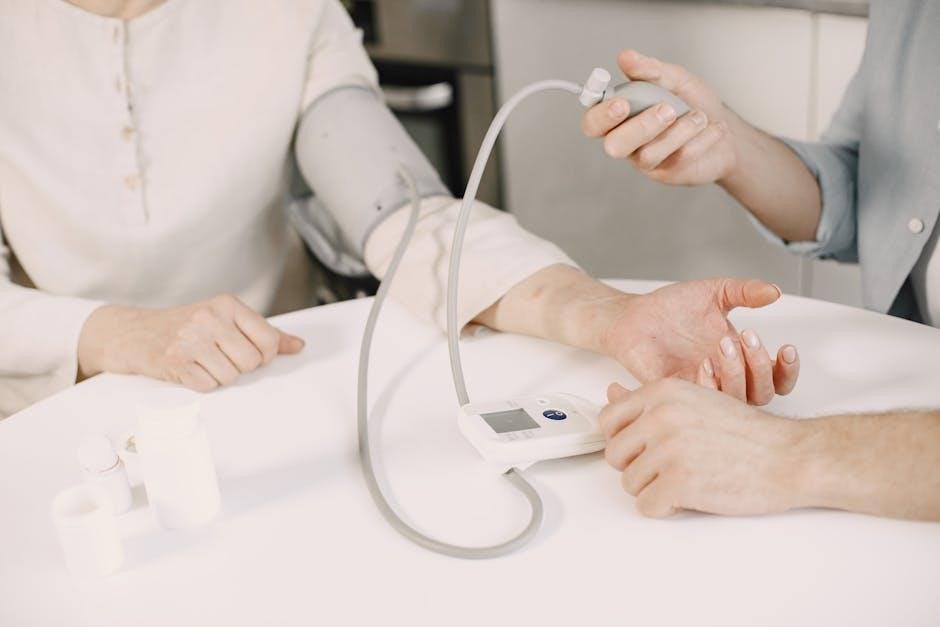
Ensure the cuff is snug but not too tight; you should be able to comfortably slide one finger between the cuff and your arm. Do not attach the cuff over clothing, as this can affect the accuracy of the reading. Avoid applying the cuff to a limb with an IV infusion, A-V shunt, or other intravascular access.

Secure the cuff firmly with the hook and loop fastener. The cuff should be positioned at heart level for accurate measurements. Proper cuff placement is crucial for reliable blood pressure readings.

Taking a Measurement

To obtain accurate readings, ensure proper positioning and follow the step-by-step guide; remaining still during measurement is essential for reliable results with the Equate 4000.

Proper Positioning

Achieving accurate blood pressure readings relies heavily on correct positioning during measurement. Sit comfortably with your back supported and your feet flat on the floor – avoid crossing your legs.

Ensure your arm is supported at heart level, ideally on a table or armrest. The cuff should be placed on your upper arm, approximately one inch above the bend of your elbow.

Avoid talking or moving during the measurement process, as this can artificially inflate your blood pressure. Relax for at least five minutes before taking a reading, and ensure you haven’t consumed caffeine, smoked, or exercised within 30 minutes prior.

Incorrect positioning can lead to inaccurate results, so taking the time to prepare properly is crucial for effective blood pressure monitoring with the Equate 4000.

Step-by-Step Measurement Guide

Follow these steps for accurate readings with your Equate 4000 blood pressure monitor. First, ensure the cuff is securely attached to your upper arm, positioned correctly at heart level.

Press the ‘START’ button to initiate the measurement. The cuff will automatically inflate, and you should remain still and silent throughout the process.

The monitor will display your systolic and diastolic blood pressure, along with your heart rate. Note these values carefully.

If an error occurs, refer to the troubleshooting section of this manual. Repeat the measurement if necessary, ensuring proper positioning each time. Remember to allow a brief interval between consecutive measurements.

Data will be stored with the time and date, thanks to the built-in clock.

Understanding Your Readings

The Equate 4000 displays systolic and diastolic pressure, alongside your heart rate. Interpreting these values helps track cardiovascular health and identify potential concerns.

Systolic and Diastolic Pressure

Systolic pressure, the top number, represents the force against your artery walls when your heart beats. It indicates the pressure during ventricular contraction. Conversely, diastolic pressure, the bottom number, measures the force against your artery walls while your heart rests between beats, reflecting pressure during ventricular relaxation.

Understanding both values is crucial for a complete assessment. Generally, normal blood pressure falls below 120/80 mmHg. Elevated systolic pressure alone is common with age, while consistently high diastolic readings require attention. Regularly monitoring both provides valuable insights into your cardiovascular health. Consult a healthcare professional for personalized interpretation and guidance based on your readings and medical history. Accurate tracking with the Equate 4000 aids in informed healthcare discussions.

Heart Rate Interpretation

The Equate 4000 also measures your heart rate in beats per minute (BPM), providing a valuable indicator of cardiovascular function. A normal resting heart rate generally falls between 60 and 100 BPM, though this can vary based on fitness level, stress, and medication.

Consistently high or low heart rates outside this range warrant medical attention. Elevated rates may indicate stress, dehydration, or underlying medical conditions, while lower rates could suggest excellent fitness or, in some cases, require evaluation. Tracking your heart rate alongside blood pressure readings offers a more comprehensive view of your health. Remember to note any factors that might influence your heart rate during measurement, such as recent exercise or caffeine intake, when discussing results with your doctor.

Memory Function and Data Review

The Equate 4000 stores measurement data, including date and time, allowing you to easily recall previous readings and track trends in your blood pressure.

Storing Measurement Data

The Equate 4000 Series blood pressure monitor automatically saves each measurement taken, along with the precise date and time of the reading. This feature is crucial for tracking your blood pressure trends over time and providing valuable data to your healthcare provider.

The monitor’s memory capacity allows for the storage of a significant number of readings, enabling a comprehensive history of your blood pressure levels. This stored data is invaluable for identifying patterns, assessing the effectiveness of any lifestyle changes or medications, and making informed decisions about your health.

Each reading is securely stored within the device, ensuring that your personal health information remains private and readily accessible when needed. The consistent recording of data empowers you to actively participate in managing your cardiovascular health and maintaining a proactive approach to wellness.

Recalling Previous Readings

To review your stored blood pressure measurements, utilize the memory recall function on the Equate 4000 monitor. This allows you to easily access past readings and monitor your blood pressure trends over days, weeks, or even months. The process typically involves pressing a dedicated “Memory” or “Recall” button on the device.

The monitor will then display the previously recorded readings, often showing the systolic and diastolic pressure, pulse rate, and the date and time the measurement was taken. You can usually cycle through the stored data using the same button, allowing you to review your complete history.

Regularly reviewing your readings can help you identify any significant changes or patterns, which you can then discuss with your doctor. This proactive approach to monitoring your health empowers you to make informed decisions and maintain optimal cardiovascular wellness.

Bluetooth Connectivity & Equate Heart Chart App

The Equate 4000 seamlessly connects via Bluetooth to the Equate Heart Chart app, enabling data synchronization and comprehensive tracking of your blood pressure readings.

Pairing with Your Mobile Device

To establish a Bluetooth connection between your Equate 4000 monitor and your mobile device, first ensure Bluetooth is enabled on your smartphone or tablet. Open the Equate Heart Chart app and follow the on-screen instructions to initiate the pairing process.

The app will guide you through searching for available devices. Select your Equate 4000 monitor from the list. During pairing, a Bluetooth symbol will illuminate on the monitor, confirming the connection attempt. You may be prompted to enter a pairing code, if required, which will be displayed within the app.

Once successfully paired, the app will automatically synchronize with the monitor, allowing for seamless data transfer. Ensure the monitor is within range of your mobile device during synchronization. Refer to the app’s help section for detailed troubleshooting steps if pairing fails.

Data Synchronization and Tracking

Following successful pairing, your Equate 4000 monitor will automatically synchronize measurement data with the Equate Heart Chart app via Bluetooth. This process ensures your blood pressure and heart rate readings are securely stored and readily accessible on your mobile device.

Within the app, you can track your readings over time, viewing trends and patterns in your blood pressure. The app provides graphical representations of your data, making it easier to understand your cardiovascular health. The built-in clock automatically records the date and time of each measurement, providing a comprehensive history.

Regular data synchronization allows for informed discussions with your healthcare provider. The app facilitates easy sharing of your blood pressure data, aiding in accurate diagnosis and treatment planning.

Troubleshooting Common Issues

If error messages appear, consult the manual for specific meanings. Inaccurate readings can stem from improper cuff placement or movement during measurement.

Error Messages and Their Meanings

The Equate 4000 monitor utilizes error messages to indicate potential issues during measurement. Understanding these alerts is crucial for accurate readings and proper device function. An “Err” display, often accompanied by a number, signals a specific problem.

For instance, “Err 1” typically indicates a cuff inflation error – ensure the cuff is correctly attached and not too tight. “Err 2” suggests excessive movement during the measurement process; remain still. “Err 3” may point to a low battery, requiring replacement. If you encounter a persistent error not listed, or if the monitor continues to malfunction, discontinue use and consult the full user manual or contact customer support.

Always refer to the complete manual for a comprehensive list of error codes and their corresponding solutions, ensuring optimal performance and reliable blood pressure monitoring.

Inaccurate Readings ー Potential Causes

Several factors can contribute to inaccurate blood pressure readings with the Equate 4000. Improper cuff placement is a common issue; the cuff should be snug but not overly tight, positioned correctly on the upper arm. Movement during measurement significantly impacts results – remain still and relaxed throughout the process.

External factors, like talking or crossing your legs, can also elevate readings. Avoid caffeine, alcohol, and smoking for at least 30 minutes before measurement. Do not apply the cuff over clothing or on a limb with an IV or A-V shunt, as this will interfere with accurate blood flow assessment.

Ensure the correct cuff size is used, and regularly calibrate the device as recommended in the user manual for continued reliability.

Maintenance and Care

Regularly clean the monitor and cuff with a soft, damp cloth; avoid harsh chemicals. Store the device in a cool, dry place, protected from direct sunlight.

Cleaning the Monitor and Cuff

To ensure accurate readings and prolong the life of your Equate 4000 Blood Pressure Monitor, regular cleaning is essential. Always disconnect the cuff from the monitor before cleaning. Use a soft, slightly damp cloth to gently wipe the monitor’s surface and the cuff material.


Avoid using harsh chemical cleaners, solvents, or abrasive materials, as these can damage the device and affect its accuracy. Do not immerse the monitor or cuff in water. For stubborn stains on the cuff, a mild detergent diluted in water can be used, but ensure all soap residue is removed with a clean, damp cloth.
Allow both the monitor and cuff to air dry completely before reattaching and storing. Regularly inspect the cuff for cracks or damage; a damaged cuff can lead to inaccurate readings. Proper cleaning and care will help maintain the performance and reliability of your Equate 4000 monitor.

Storage Guidelines

Proper storage is crucial for maintaining the longevity and accuracy of your Equate 4000 Blood Pressure Monitor. When not in use, store the monitor and cuff in a cool, dry place, away from direct sunlight and extreme temperatures. Avoid storing the device in areas with high humidity, as this can damage the electronic components.

It’s recommended to store the monitor in its original packaging or a protective case to prevent dust accumulation and physical damage. Do not store the cuff tightly wound, as this can cause it to lose its elasticity over time. Gently roll or loosely fold the cuff for storage.

Keep the batteries removed from the monitor if it will be stored for an extended period to prevent corrosion. Ensure the storage location is easily accessible for regular use and maintenance checks. Following these guidelines will help ensure your Equate 4000 remains in optimal condition.