fanuc robot programming manual pdf
Fanuc Robot Programming Manual PDF: A Comprehensive Guide
ROBOGUIDE V10‚ the latest iteration‚ delivers advanced offline programming and simulation capabilities. It boasts enhanced performance and a significantly improved user experience for
programmers.
Fanuc robot programming is a cornerstone of modern industrial automation‚ enabling precise control and repeatable performance across diverse applications. Mastering this skill requires a solid understanding of the available programming languages‚ control systems‚ and software tools. A Fanuc robot programming manual PDF serves as an invaluable resource for both novice and experienced programmers‚ providing detailed guidance on everything from basic operations to advanced techniques.
These manuals cover essential aspects like robot kinematics‚ motion commands‚ I/O configuration‚ and safety protocols. They often include practical examples and troubleshooting tips‚ accelerating the learning process and minimizing downtime. The latest versions‚ such as those supporting ROBOGUIDE V10‚ emphasize offline programming and simulation‚ allowing users to develop and test programs without interrupting production. Accessing a comprehensive Fanuc robot programming manual PDF is the first step towards unlocking the full potential of these powerful robotic systems‚ ensuring efficient and reliable operation.
Understanding Fanuc Robot Control Systems
Fanuc robot control systems are renowned for their reliability and precision‚ forming the brain of any automated process. A thorough understanding of these systems is crucial for effective programming and maintenance. The Fanuc robot programming manual PDF provides detailed insights into the architecture‚ components‚ and functionalities of these controllers‚ including the various hardware and software interfaces.
These manuals explain the role of the motion controller‚ servo amplifiers‚ and I/O modules‚ detailing how they interact to execute programmed instructions. They also cover the system’s safety features and emergency stop mechanisms. With the advent of tools like ROBOGUIDE V10‚ understanding the control system’s integration with simulation software is paramount. A well-documented Fanuc robot programming manual PDF empowers users to diagnose issues‚ optimize performance‚ and ensure seamless operation of the robotic cell‚ maximizing productivity and minimizing potential disruptions.

TP Programming (Teach Pendant Programming)
Teach Pendant Programming (TP) is a fundamental method for controlling Fanuc robots‚ allowing direct interaction and real-time adjustments. The Fanuc robot programming manual PDF dedicates significant sections to TP programming‚ detailing the interface‚ menu structure‚ and available commands. It explains how to jog the robot‚ record positions‚ and create basic programs directly through the teach pendant.
These manuals emphasize the importance of understanding coordinate systems and frame definitions within the TP environment. They also cover advanced TP features like interrupt handling and background processing. Utilizing ROBOGUIDE V10 alongside the Fanuc robot programming manual PDF allows users to simulate and validate TP programs offline‚ reducing downtime and improving program accuracy. Mastering TP programming‚ guided by comprehensive documentation‚ is essential for quick prototyping‚ troubleshooting‚ and making on-the-fly adjustments in a production environment‚ ensuring efficient robot operation.

KAREL Programming: An Overview
KAREL is a high-level programming language specifically designed for Fanuc robots‚ offering greater flexibility and complexity than TP programming. The Fanuc robot programming manual PDF provides extensive documentation on KAREL syntax‚ data types‚ and program structure. It details how to create custom functions‚ manage variables‚ and implement advanced logic within robotic applications.
KAREL excels in tasks requiring complex decision-making‚ data manipulation‚ and communication with external devices. The manuals explain how to integrate KAREL programs with TP programs‚ leveraging the strengths of both methods. ROBOGUIDE V10 supports KAREL programming‚ enabling simulation and debugging of KAREL code before deployment. Understanding KAREL‚ as outlined in the Fanuc robot programming manual PDF‚ unlocks the potential for creating highly customized and efficient robotic solutions‚ exceeding the capabilities of basic teach pendant programming and streamlining complex automation processes.
Fanuc ROBOGUIDE: Simulation and Offline Programming
Fanuc ROBOGUIDE is a powerful software suite for creating‚ simulating‚ and debugging robot programs offline. The Fanuc robot programming manual PDF often references ROBOGUIDE as a crucial tool for program development and validation. It allows users to build virtual robot cells‚ import CAD data‚ and test programs without interrupting production. This significantly reduces downtime and optimizes cycle times.
ROBOGUIDE V10‚ the latest version‚ features enhanced performance and a more intuitive user interface‚ as detailed in associated documentation. The Fanuc robot programming manual PDF explains how to transfer programs created in ROBOGUIDE to the actual robot controller. Simulation capabilities include collision detection‚ reachability analysis‚ and cycle time estimation. Mastering ROBOGUIDE‚ guided by the manual‚ is essential for efficient robot deployment and troubleshooting‚ minimizing risks and maximizing productivity in automated processes.
ROBOGUIDE V10 Features and Benefits
ROBOGUIDE V10 represents a significant advancement in offline robot programming‚ as highlighted within the Fanuc robot programming manual PDF. Key features include improved performance‚ enabling faster simulation speeds and handling of more complex robot cells. The user interface has been redesigned for enhanced intuitiveness‚ streamlining the programming process.
Benefits extend to reduced commissioning times‚ as programs are thoroughly tested and validated offline before deployment. Collision detection is more robust‚ preventing potential damage and ensuring safety. The Fanuc robot programming manual PDF details how to leverage these features for optimized cycle times and increased throughput. Furthermore‚ ROBOGUIDE V10 supports a wider range of Fanuc robot models and controllers‚ offering greater flexibility. It’s a vital tool for minimizing downtime‚ improving robot utilization‚ and accelerating automation projects‚ all documented within the comprehensive manual.
Downloading Fanuc Robot Programming Manuals (PDF)
Accessing the Fanuc robot programming manual PDF is crucial for effective robot operation and maintenance. Official manuals are typically available through the Fanuc America Corporation website‚ requiring registration and often a valid serial number for your specific robot controller. Several online resources and forums dedicated to industrial automation may also host archived versions‚ but verifying their authenticity is paramount.
Be cautious of unofficial sources‚ as outdated or inaccurate manuals can lead to programming errors or safety hazards. The Fanuc robot programming manual PDF contains vital information on safety protocols‚ troubleshooting guides‚ and detailed programming instructions. Always prioritize downloading from the official Fanuc website to ensure you have the most current and reliable documentation. Remember to regularly check for updates‚ as Fanuc frequently releases revised manuals reflecting software and hardware changes. Proper documentation is key to maximizing your investment in Fanuc robotics.
Common Fanuc Robot Programming Languages
Fanuc robot programming primarily revolves around two core languages: TP (Teach Pendant) programming and KAREL. TP programming‚ utilizing the teach pendant‚ is ideal for straightforward tasks and quick adjustments‚ offering a user-friendly interface for direct robot control. KAREL‚ a proprietary language resembling Pascal‚ provides greater flexibility and power for complex applications‚ allowing for advanced logic‚ data handling‚ and communication with external devices.
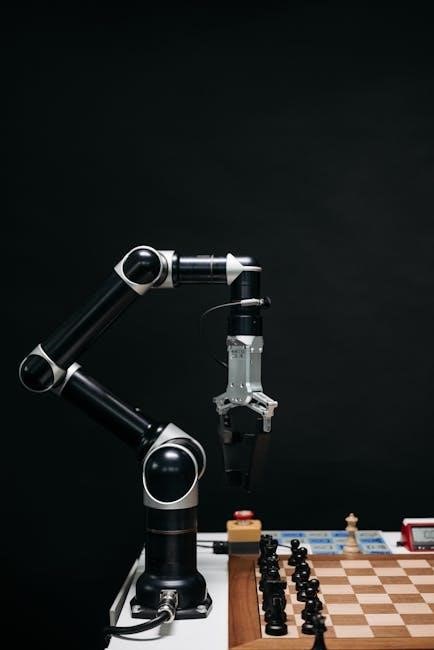
The Fanuc robot programming manual PDF details both languages extensively. While TP is excellent for initial setup and basic movements‚ KAREL excels in creating sophisticated routines for palletizing‚ welding‚ or complex assembly processes. Understanding both is beneficial‚ as they are often used in conjunction. Newer systems also support integration with external programming environments like .NET and Python‚ expanding programming possibilities. Mastering these languages‚ guided by the official documentation‚ unlocks the full potential of Fanuc robots.
Motion Commands and Instructions
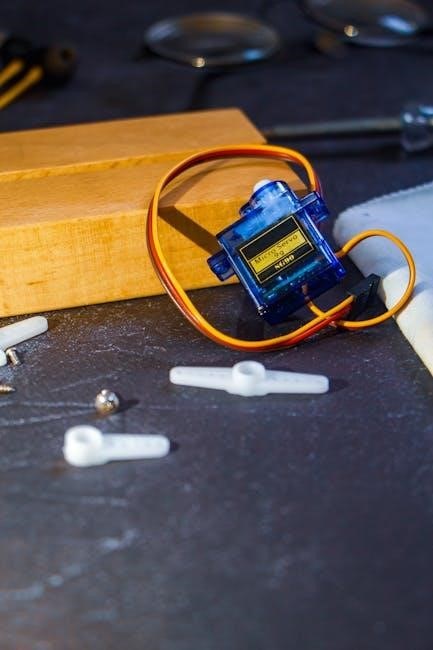
Fanuc robot programming relies on a robust set of motion commands detailed within the Fanuc robot programming manual PDF. These commands govern the robot’s movements‚ encompassing point-to-point (PTP)‚ linear (LIN)‚ circular (CIRC)‚ and spline interpolation. PTP moves the robot directly to a specified point‚ prioritizing speed. LIN creates straight-line paths‚ crucial for precise applications. CIRC enables arc and circular movements‚ essential for welding and material handling.
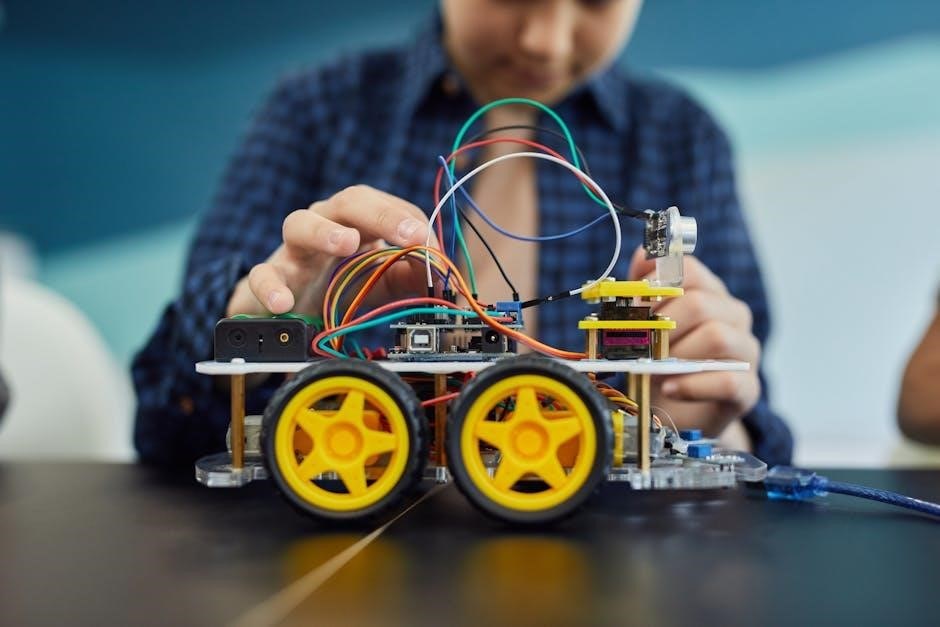
The manual thoroughly explains parameters like speed‚ acceleration‚ and blending‚ allowing programmers to fine-tune motion profiles. Instructions like ‘MOVE’ initiate movement‚ while ‘SPEED’ and ‘ACCEL’ control the robot’s dynamics. Mastering these commands‚ alongside understanding coordinate systems (joint‚ world‚ tool)‚ is fundamental. Advanced features include motion synchronization and path following‚ enabling complex‚ coordinated movements. Proper utilization of these commands‚ as outlined in the documentation‚ ensures efficient and accurate robot operation.
Input/Output (I/O) Configuration and Programming
The Fanuc robot programming manual PDF dedicates significant coverage to Input/Output (I/O) configuration‚ a critical aspect of robotic system integration; I/O allows the robot to interact with external devices – sensors‚ actuators‚ PLCs‚ and more. The manual details how to define and assign digital and analog I/O signals within the robot controller. This involves configuring I/O boards and mapping signals to specific addresses.
Programming I/O utilizes instructions like ‘INPUT’ and ‘OUTPUT’ to read sensor data and control external devices. The manual explains how to use these instructions within TP and KAREL programs; Proper I/O programming ensures seamless communication between the robot and its environment. Considerations include signal timing‚ synchronization‚ and error handling. Understanding I/O configuration is vital for building automated systems that respond intelligently to real-world conditions‚ as thoroughly documented in the provided resources.

Palletizing Applications Programming
The Fanuc robot programming manual PDF provides detailed guidance on programming palletizing applications‚ a common use case for industrial robots. It outlines strategies for defining pallet patterns‚ layer configurations‚ and pick-up/placement sequences. The manual emphasizes utilizing motion commands – like linear and circular interpolation – to achieve efficient and accurate palletizing.
Programming often involves defining work objects representing boxes‚ layers‚ and pallets. The manual explains how to use user frames and tool frames to simplify coordinate transformations. Key considerations include collision avoidance‚ cycle time optimization‚ and handling variations in product dimensions. Furthermore‚ the PDF details how to integrate vision systems for dynamic palletizing‚ where the robot adapts to changing product positions. Mastering these techniques‚ as described in the manual‚ enables the creation of robust and flexible palletizing solutions.
Welding Applications Programming
The Fanuc robot programming manual PDF dedicates significant sections to welding applications‚ detailing the intricacies of arc welding robot programs. It covers essential aspects like setting weld parameters – voltage‚ current‚ wire feed speed – and configuring welding tools. The manual explains how to utilize specialized welding instructions within the Fanuc programming language‚ enabling precise control over the welding process.
Programming for welding often involves defining weld paths‚ maintaining consistent torch angles‚ and managing weld sequences. The PDF emphasizes the importance of using search functions to locate weld joints accurately‚ even with part variations. It also details techniques for weave patterns and seam tracking. Furthermore‚ the manual provides guidance on integrating external welding power sources and sensors. Understanding these concepts‚ as outlined in the manual‚ is crucial for developing efficient and high-quality robotic welding cells.
Error Handling and Troubleshooting
The Fanuc robot programming manual PDF provides a comprehensive section dedicated to error handling and troubleshooting‚ a critical aspect of robotic system maintenance. It details common error codes‚ their potential causes‚ and recommended corrective actions. This section isn’t just a list of codes; it explains the underlying logic that triggers them‚ aiding in effective diagnosis.
The manual emphasizes a systematic approach to troubleshooting‚ starting with verifying basic connections and power supplies. It guides users through interpreting alarm messages displayed on the teach pendant and utilizing diagnostic tools within the robot controller. Furthermore‚ it covers procedures for recovering from program crashes and handling communication errors. Understanding the manual’s guidance on error recovery minimizes downtime and ensures the continued operation of the robotic system. It also stresses safety precautions when addressing error conditions‚ preventing potential hazards during maintenance.
Safety Considerations in Fanuc Robot Programming
The Fanuc robot programming manual PDF dedicates significant attention to safety‚ recognizing the inherent risks associated with robotic systems. It outlines crucial safety standards and guidelines that programmers must adhere to during program development and execution. This includes detailed explanations of safety functions like emergency stops‚ safety-rated monitored stops‚ and speed and separation monitoring.
The manual stresses the importance of risk assessments before implementing any robotic application. It provides guidance on defining work envelopes‚ establishing safety zones‚ and implementing appropriate safeguarding measures‚ such as light curtains and safety scanners. Programmers are instructed on how to utilize safety features within the robot controller and how to properly configure safety parameters. Furthermore‚ the manual emphasizes the need for thorough testing and validation of safety functions before deploying a program in a production environment. Ignoring these safety considerations can lead to serious injury or damage.

Resources for Fanuc Robot Programming Support
Accessing comprehensive support is vital when working with Fanuc robot programming. Beyond the detailed Fanuc robot programming manual PDF‚ a wealth of resources exists for programmers of all levels. Fanuc America’s website provides a dedicated support section‚ including frequently asked questions (FAQs)‚ application examples‚ and technical bulletins.
Fanuc also offers extensive training programs‚ ranging from introductory courses to advanced certification programs‚ covering TP programming‚ KAREL‚ and ROBOGUIDE. These courses‚ often delivered both online and in-person‚ provide hands-on experience and expert guidance. Furthermore‚ a global network of authorized Fanuc integrators offers specialized support and custom programming services. Online forums and communities dedicated to Fanuc robotics provide a platform for users to share knowledge‚ troubleshoot issues‚ and collaborate on projects. Utilizing these resources ensures efficient problem-solving and maximizes the potential of Fanuc robotic systems.
Latest Updates and Future Trends in Fanuc Robotics
Fanuc consistently pushes the boundaries of robotics‚ with recent updates focusing on enhanced integration and intelligent features. ROBOGUIDE V10‚ highlighted in the latest Fanuc robot programming manual PDF updates‚ exemplifies this commitment‚ offering significant performance improvements and a streamlined user interface. Future trends point towards increased adoption of AI and machine learning within robot control systems.
Expect to see more sophisticated motion planning algorithms‚ predictive maintenance capabilities‚ and collaborative robots (cobots) with advanced sensing and safety features. Cloud-based robot programming and remote monitoring are also gaining traction‚ enabling greater flexibility and accessibility. Fanuc is actively developing solutions for digital twin technology‚ allowing for virtual commissioning and optimization of robotic cells. These advancements‚ detailed in evolving documentation‚ will empower users to achieve higher levels of automation and efficiency in their operations‚ demanding continuous learning and adaptation.